Walk on Water is a very inspirational whitewater kayaking film that you need to watch.
Here is the description on the Youtube:
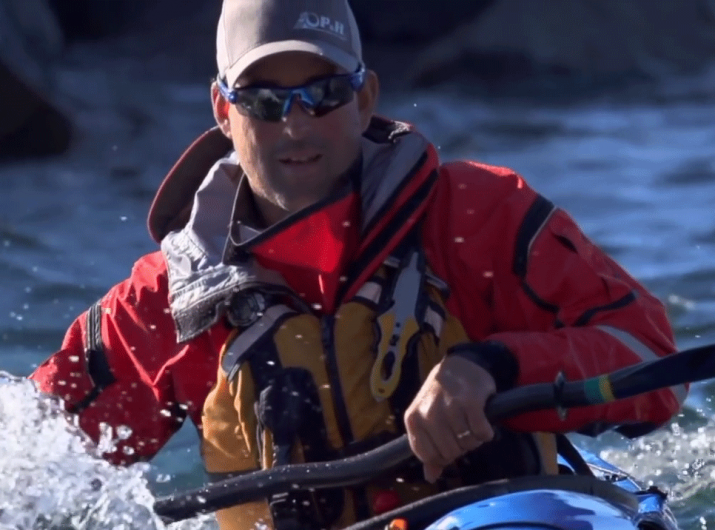
When a skiing accident left Greg Mallory paralyzed from the waist down, he turned to whitewater kayaking to help him escape his wheelchair. Now he's an accomplished Class V whitewater paddler who finds strength, challenge and meaning in paddling rivers. This is his story.
Walk on Water was directed by Andy Maser who has shot several other whitewater films for both PBS and National Geographic. Check out his website where he has a very good documentary he put together about the largest dam removal project in the US. It’s called Oregon Field Guide Special: The White Salmon River Runs Free. If you are into exploding dams and huge flood water it will be right up your alley.
Thanks for Bryan for the heads-up.
P&H Kayaks ready to go out the door...
The thing about taking vacation the day Canoecopia ends is that it takes you forever to get around to reporting in it when you get back. That's my excuse and I'm sticking to it.
The short report is that it’s a great event and if you don't go, you need to. It’s one of the few consumer trade shows that the owners and reps of various gear manufactures actually attend so if you can get the goods on new products straight from the horse's mouth.
I had the great pleasure of being invited to give two presentations this year so I showed up with laptop in hand to speak on, "The Search and Rescue Machine" and, "Paddling in Georgian Bay". The first presentation was a look into the technology, gear and history of search and rescue while the second presentation was about why Georgian is the second best freshwater paddling destination in North America behind Lake Superior.
Throughout the weekend I was mainly working in the Naturally Superior Adventures booth meeting people and giving them all the reasons why they needed to cross the border and do a trip on the Canadian side of Lake Superior. I'm super excited about leading a trip for NSA this year (more on it another day) so I spent most of my time telling people that they need to step up and register for the trip if only for the reason that I’ve already asked for the time off work and I really wanted to go.
My buddy Ray working the Naturally Superior Adventures booth at Canoecopia.
Wandering around the show floor, I got to hang out with my buddies at P&H Kayaks who were selling kayaks like a flood was coming soon. I will admit that I ended up spending spend too much time sitting in the new Aries 150 and I kinda fell in love. I don’t think that’s a bad thing.
Bending Branches had a very cool paddle manufacturing process display.
For 2013, P&H tweaked the deck and outfitting of the Aries a bit by adding a day-hatch and recessed slots for a spare paddle. To make room for the day hatch, they replaced the rear oval hatch with a smaller hatch which makes sense as it’s a boat built for rough water and this should help keep the hatch from imploding in big surf.
Of course there was a huge pile of new gear on display at the show and by now you have probably read some of the very good reports by other bloggers of their Canoecopia shopping adventures. If you are looking for a solid report, check out Preston Ciere’s blog, portageur.ca. It’s super extensive and he has several great posts showing off some of the treasures he found along the way.
Two of the items that really interested me that were new this year included:
New Kokatat Maximus PFD.
Kokatat has a bunch of new new lifejackets are on the market this year including the very cool Maximus. I tried it on and found it to be super comfortable and streamlined. I really like the small design features like the tapered foam edges which help bulkiness feeling to a minimum. Ticket price for this bad-boy is about $160.
New Lendal Paddle Kenitic blade.
Did you know Lendel Paddles are back? For 2013 they have released several new blade models including their Kinetik Touring line which is a fully carbon blade with a foam core. The construction looks really solid and I like their redesigned Lendal Paddlok ferrule that uses a titanium insert that is pressed out against the paddle shaft to lock the unit together.
I’m really keen to give the new Lendal Paddles a try this season to see how they feel in the water. When I was standing in in the Lendal booth I decided to take one for a paddle up and down the aisle and in the process almost took a ladies head off who was standing next to me. I still feel it was her fault.
Keith Wikle and Scott Fairty working the Gales Storm Gathering booth.
Registration is filling fast so get yourself signed up for their event pronto.
I will admit that it’s a bit of a haul driving 12 hours for a weekend but it's a total blast hanging out with paddlers who I see only a couple of times a year. It reminds me of friends you might have had a summer camp when you were a kid. Even though you go months without talking, you fall back in the rhythm and pick up right where you left off when spending the evening figuring out how to change the paddling world over beers.
New kayaking strokes (let alone one that you can actually use) come along once in a blue moon but I think we might have a possible winner here with The Haghighi.
Taught to us by Leon Sommé from Body Boat Blade, The Haghighi is intended as a very powerful stroke when you need to turn your kayak downwind or if you need to quickly turn and catch a wave downwind to surf.
Leon explains the whole thing in the video below so take a look. I haven't played with it yet so I'm keen to see what you think about it after getting out on the water and trying it out. Post your comments below.
Cool history to this stroke, it was invented by Leon's dentist, Dan Haghighi.
These raft guides clearly know where the river photographer is...


Got a quick joke for you:
Q: What's a raft guide without a girlfriend?
A: homeless.
Sadly I don’t have any photo credits for these as I found them all on imgur. This email address is being protected from spambots. You need JavaScript enabled to view it. if these are yours and I will be happy to update the photo credit.
NASA recently released a colourised photo representing the ocean salinity differences around the world.
I thought it was pretty cool to see how much of an influence the Amazon River, St. Lawrence River and the ice caps at the north pole. Makes sense when you think about it but I clearly hadn’t thought about it before.
This information comes from data captured by NASA’s Aquarius instrument.
Jet Propulsion Laboratory website explains what’s going on and why we should care about this:
Launched June 10, 2011, aboard the Argentine spacecraft Aquarius/Satelite de Aplicaciones Cientificas (SAC)-D, Aquarius is NASA's first satellite instrument specifically built to study the salt content of ocean surface waters. Salinity variations, one of the main drivers of ocean circulation, are closely connected with the cycling of freshwater around the planet and provide scientists with valuable information on how the changing global climate is altering global rainfall patterns.
The salinity sensor detects the microwave emissivity of the top approximately 1 inch (1 to 2 centimeters) of ocean water - a physical property that varies depending on temperature and saltiness. The instrument collects data in 240-mile-wide (386 kilometers) swaths in an orbit designed to obtain a complete survey of global salinity of ice-free oceans every seven days.
They also released a very cool visualization showing the ocean surface salinity changes from December 2011 to December, 2012.
Photo credit: NASA