Issues

Wednesday, 21 February 2007 16:07

Maps for Canada

By:
Topographic Map

Last year the Canadian Government announced plans to discontinue printing paper topographic maps. They planned to only offer electronic versions of it allowing you to print off your own maps.

There was lots of press about it as well public outcry.

I just got a letter from Heather McAdam, Chair, Map Users Advisory Committee. She has confirmed that the Government has backtracked for now and have started a consultation process to look at the use of printed maps in the future.

Here is a copy of the letter I received:

Dear Maps for Canadians Supporter,

Last year was a great year for topographic mapping in Canada. The Government of Canada opted to reinstate the production of print topographic maps as a direct result of many hundreds of supporters of this service, such as yourself. We are asking you again to show your support for mapping by participating in an on-line consultation initiated by the Minister of Finance, the Honourable Jim Flaherty.

Although topographic map services have never been subject to public consultation, thanks to you for voicing your concerns. Maps for Canadians proved that topographic mapping is an important service to Canadians. This was an important first step to renew Canada’s topographic mapping. Canadians, through government as well as the private sector, need quality map data for responsible decision-making.

Until February 28th, the Government of Canada is calling for your input on its budget priorities. I would like to ask for your input once again on the subject of topographic mapping. The updating of topographic mapping slowed down first way back in the 1970's, to the point where today, the average print topographic map is 27 years old, and the digital topographic maps are no better.

If you are concerned that topographic maps need to be updated, because,
  • topographic maps support search and rescue and emergency response teams,
  • topographic maps support the enjoyment and stewardship of Canada's natural environment,
  • topographic maps support Arctic sovereignty, such as the Northwest Passage,
  • many other important services to Canadians.

Please submit 50 words or less to the Ministry of Finance's online pre-budget consultations, as a spending priority of the Government.

Sample statement:
The Government of Canada must ensure complete and up-to-date topographic maps of Canada by Natural Resources Canada to: defend our sovereignty and security in the face of global realities, support our search and rescue teams, monitor Canada’s environmental and natural resources base.

I hope that we can we count on your support. If you would like your organization added to the the list of supporting organizations, please send a reply.

For more information and opportunities for involvement, please see www.mapsforcanadians.ca, and stay in touch.

Yours sincerely,
Heather McAdamChair, Map Users Advisory Committee,
Association of Canadian Map Libraries and Archives

Friday, 01 December 2006 14:22

Seagrass

By:

sea_grass.jpg 

For people looking for more information on the seagrass news article posted today, the Environmental Protection Agency/Queensland Parks and Wildlife Service has a great page on it.

A great article for sea kayakers as we play and teach in areas where seagrass grows.

The other day, I was reading a letter to the editor in the Concord Monitor. It was based on an editorial against the proposed annual $10 registration fees for canoes & kayaks.

The letter went on to rail against the proposal listing a pile of reasons why the idea is bad. This isn't the first time that I have heard people complaining against the issue every time it comes up.

I live in Canada, as far as I know there haven't been any real proposals on the table so the whole thing is foreign to me.


Why is there so much passion against it? What is wrong with licensing fees? How is paddling any different then other sports like sailing, or archery any different where licensing/registration fees have been around for a long time.

Paddlers have been complaining for a long time that access to their rivers has been difficult. By logic, if you are paying for access through your registration fees, doesn't that give you a better voice for access?

Boats get stolen all the time, when your boat gets registered, the serial number and description gets added to a database. Is your boat registered with the police?

Finally the other big issue that I hear about each time is the astronomical fees associated with registration. How is paying between $10-50 per year unthinkable then participants will drop $350 on a paddle? Think about it, you spend $50 just to go out to dinner and a movie.

I haven't made up my mind and maybe I am not seeing the big picture of the big government monster.


I'm I missing something? Is there small boater registration in your area? What do you think? Has it ruined your life?

Rock Mine
Rock Mine

Hello all. We just got this letter from Becky Mason, daughter of the famed canoeist and film producer, Bill Mason. It is regarding a very important issue unfolding on the north shore of Lake Superior. As somebody who has paddled in that area, I personally urge you get involved in this project.


***************************************************

Hi All,

I've been following an open pit mine environmental issue on the north shore of Lake Superior over the last couple of years. In a nut shell the issue is the Superior Aggregates Company has recently submitted a new Trap Rock quarry proposal to the Ontario Government so they can establish a quarry above and below the water table near the shore of Lake Superior. This whole project is to enable aggregate to be shipped to Michigan, USA to pave highways and will most likely destroy a large amount of Michipicoten Bay on the Lake Superior shoreline and probably adversely affect the waters of Lake Superior. Unfortunately no one knows for sure what will happen when this project is in production because the Ontario government rejected a call from the public to order an Environmental Assessment in 2004.


I'm told the last avenue left before Superior Aggregates Company is given the okay to go ahead on their development is for the public to write into the Superior Aggregates Company because this will trigger a government hearing. There is a tight deadline of November 27th to express concerns that their application is not addressing the long-term cumulative impacts on Lake Superior, an international body of water. I'm told they have to reply to each of your queries in accordance with the Provincial Standards. How it works is when you receive an explanation from Superior Aggregates Company you have to respond saying you're not satisfied or your letter is void. Your letter writing has to go two rounds with Superior Aggregates Company for it to register and then their application will be forced to be referred to the Ontario Municipal Board by the Minister of Natural Resources before approval of their application is granted. All backgrounders on quarry issues are on the Citizens Concerned for Michipicoten Bay (CCMB) website http://www.ccmb.ca


Superior Aggregates Company was recently quoted in THE SAULT STAR saying that the general public wants the project to go ahead as is. I urge you to write in to show them their assumption is incorrect.


Two good sample letters with the required addresses and fax numbers are on CCMB website at http://www.ccmb.ca/content/downloads.html

Sincerely,

Becky Mason


P.S.

If your looking for ideas for questions to pose then I suggest you log onto the CCMB website http://www.ccmb.ca and look at their excellent current backgrounder newsletter. Here is the direct link to it: http://www.ccmb.ca/uploads/fileassets/newsletter_oct_2006_update.pdf

***************************************************
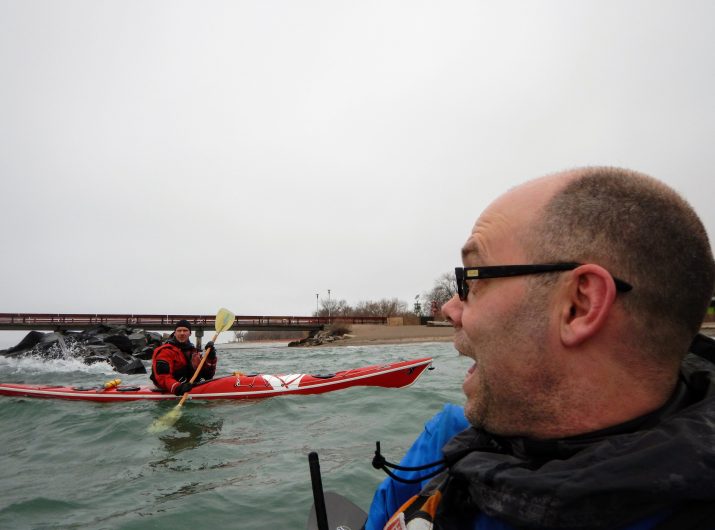
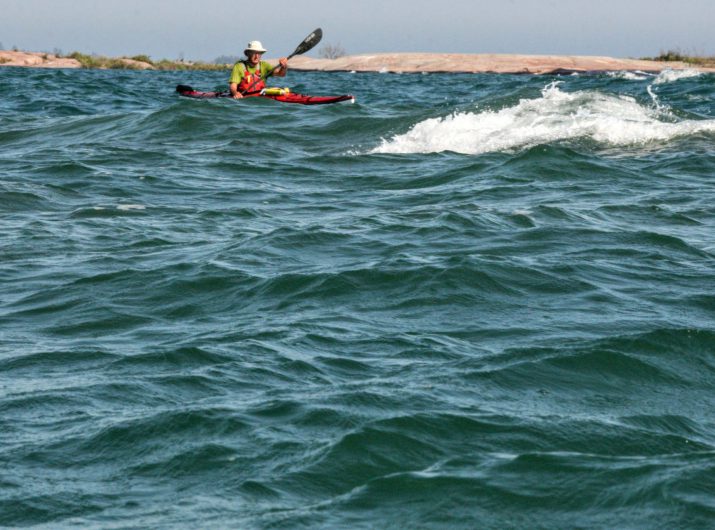
So I had a really interesting experience out paddling last weekend. I went out paddling with one of my regular paddling friends. We are both at a fairly high skill level. We like to get out surf and play around in bumpy waters.


This past weekend I was reminded just how quickly a controlled situation can quickly spiral out of control and into a potentially life threatening situation.


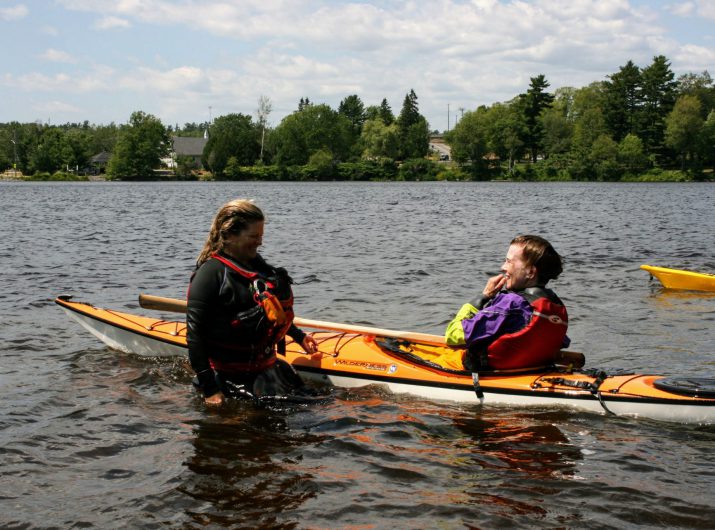
We teach rescue clinics both beginner and advanced all the time but we recently discovered that we rarely practice rescues in the extreme conditions that are truly a challenge for us. I hear the same thing happens to aerobic instructors. They are leading programs all day but because they are leading for beginners, they are not getting much benefit out of it due to the low level of intensity for their level.


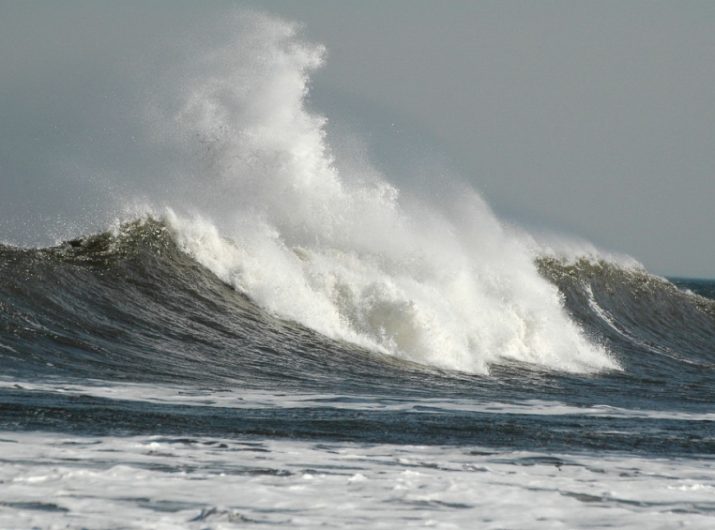
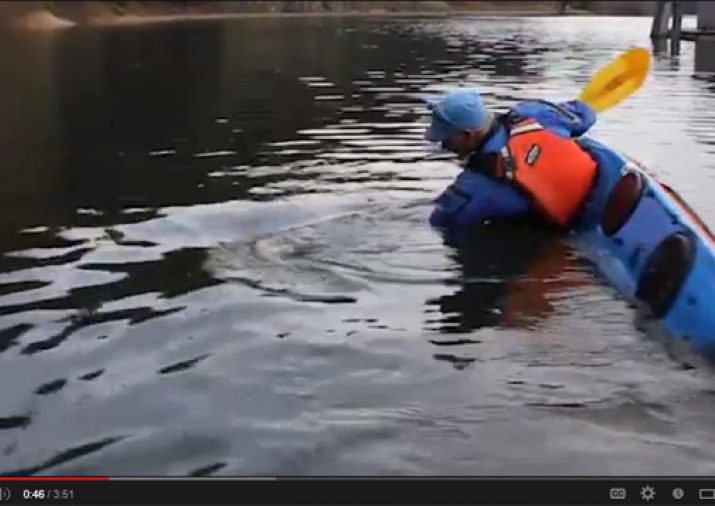
The wind was blowing really good. The surf was up and rolling in at around 3-4 feet. It was really 3-4 feet, not your fish story measurement...  We decided before we went out that we would spend the morning practicing rescues. After busting through the surf, I decided to come out of my boat and reenter and roll. No problem there. I’m back in my boat, my paddling friend hooks up to me with his pig tow and starts to paddle into the waves. The idea was to provide some positive traction so I didn’t get broached in the waves.


I started pumping but realized that it was fairly futile as the waves were just pouring in just as quickly as I was pumping. While this was going on, my friend (let’s call him George) gets bowled over by a rogue wave. The stern of his boat surfed over and hit me in the torso promptly knocking me over. Now we are both upside down and tied together. In the process, George lost his paddle and the surf took the spare off his back deck. George releases his pig tail and is now swimming.


I roll back up and I am kinda laughing to myself. It was just a month earlier I got in an argument with somebody in one of my classes as to the benefit of practicing the

"All in" rescue. He said it never happens... Here we are.


To cut the long story short, I help George find his paddles and he swims in to shore after his boat. I follow along beside him but ended up having paddle on ahead when we got into the surf as my boat was still full of water and I didn’t want to surf into him. The total distance into shore was about 300 feet so I felt OK about leaving him behind.


After picking up the pieces along the beach, we sat down on a picnic table to take a break and talk it through. The one thing that really surprised me was that the time it took things to go wrong took about 45 seconds. Seriously, 45 seconds.


We also discovered that there are certain conditions where a hand pump just becomes ineffective. What would have happened if this had of happened in conditions where swimming to shore wasn’t an option? It drove home great benefits of a foot pump. In that situation, I could have sealed my skirt and spent the time just pumping with my foot. And the funny thing is that at the time of the initial tip over, we weren’t in that crazy conditions, it was about 2 feet of swells and 2 feet of wind waves.


So we realized that accidents can happen to anyone and you especially need to be prepared in those conditions when practicing that it is going to fall apart and turn into a real rescue.


We are planning a trip for next weekend and really looking forward to it.

Get our Newsletter


Find Us on Facebook

Solo Stove Ad

About Me

David standing on a boat. Photo credit: BirgitDavid H. Johnston
Toronto, Ontario, Canada
View my complete profile

"Bring a compass, it's awkward when you have to eat your friends."

Strategic Partner

Paddle Canada Logo

P&H  Logo Werner Paddles Kokatat Logo North Water Aquapac Logo Seals Logo