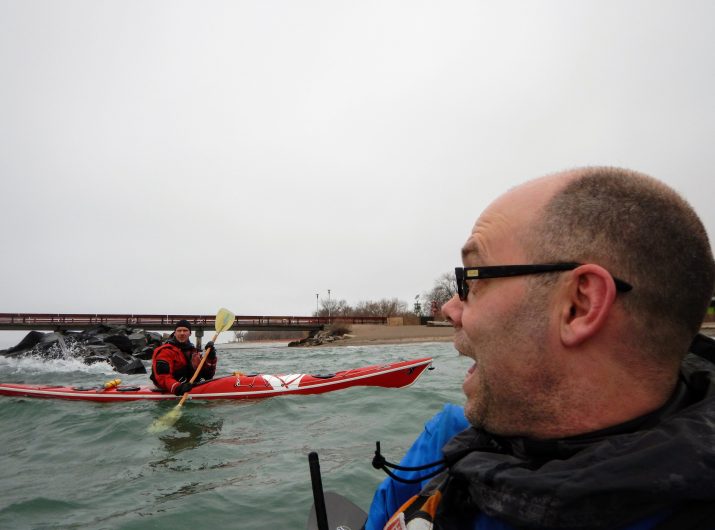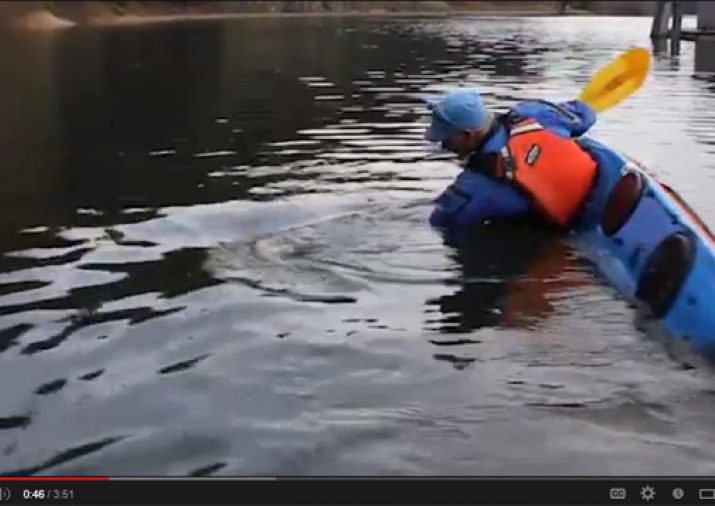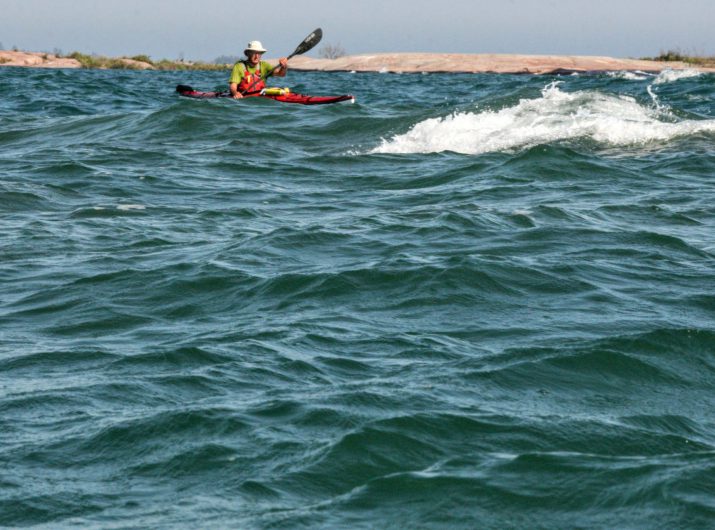
I know times have been tough on banks and they have branching out their marking to niche audiences but I think this is taking it a step to far.

I’m not sure if I should be insulted or not that they decided to put pillars around the ATM. How much damage can kayaks really do? Come on!

Photo credit: wins.failblog.org

You need to check out this absolutely gorgeous sea kayaking short film that was put together from the gang at Kaspi Arial Media. The film follows Christine Utas, one of the instructors from the White Squall Paddling Centre as she paddles through the fog at Killbear Provincial Park. I don’t think I have ever seen Georgian Bay looking so good.

 Speaking of paddling films, the Reel Paddling Film Festival is now accepting films in the following categories:

  • Best Whitewater Film
  • Best Sea Kayaking Film
  • Best Canoeing Film
  • Best Paddling Documentary
  • Best Adventure Travel Paddling Film 
  • Best Kayak Fishing Film 
  • Best Instructional Paddling Film 
  • Best Environmental Paddling Film
  • Teva Live Better Stories Amateur/Short Paddling Film
  • Best Stand Up Paddling Film

If you are thinking of entering, you had better hurry as the cut-off date is August 31, 2012. You can find all the details on their website.

Kayak Mainline Logo

Hot off the electronic press is the second episode of Kayak Mainline. If this is your first time learning about it, Kayak Mainline brings you the latest outdoor & kayaking news as well as interviews with the biggest names in the sea kayak world.

In this episode Kelly Blades and myself find out if one can paddle or surf for 365 consecutive days. Bam Margera gets injured kayaking over a 100-foot waterfall and a Saskatchewan fisherman catches more than he bargained for. Finally we have a great interview with Shawna Franklin & Leon Sommé from the Body Boat Blade kayak school who fill us in on creative ways to teach rescues and the grand announcement of the Jellyfish award.

You have a couple of options for listing. You can stream it below or download the .mp3 directly. If you are into RSS feed, here is the link. I’m currently in the process of getting the podcast listed in iTunes but it takes about a week for it to show up. I will update everybody when that hurdle gets passed. Fingers crossed!

As always, we are looking for your feedback. Based on comments from our first episode we shortened the podcast a touch and it’s now just a speck over an hour.

Direct Downlad: mp3Kayak Mainline - Episode 2 (43 megs)
RSS Feed: RSS Feed Icon

Several weeks ago I had the great pleasure of getting a package in the mail from the watersports clothing manufacturer, SeasonFive. Inside the package I found a short sleeve Barrier Top which is made of a very cool material called Atmos 1.0.

SeasonFive markets the Barrier Top as a garment to be worn when it’s to warm for a wet suit but it’s still to cold to go without any type of insulation while on the water.

What sets the Barrier Top apart from other insulating tops on the market is their proprietary ultrathin material they call Atmos 1.0. The waterproof, windproof breathable material is designed to fit snugly and provide support for your muscles.

I tried this garment out in some very intense testing conditions which included a family vacation (playing with the kids in the ocean and sitting by the pool avoiding my kids) as well as several days out paddling or teaching in a kayak.

I will start-off by saying I was quite impressed. The Barrier Top was considerably warmer then I thought it would be based on the thinness of the material. That being said, it doesn’t provide a huge amount of insulation when you go swimming (compared to fuzzy rubber or a wet suit) as water flushes down the neck but it was more then enough for playing around in the water.

The fact that it cuts the wind was really nice as it took the chill off as soon as I was out of the water. Since the garment is waterproof and hardly absorbs any water so I also found that it dried quickly.

If you are looking for a new top for out paddling in semi-cool conditions check out the Barrier Top from SeasonFive. They are a newer company so their products are only available in a couple of paddling/surfing shops so check their website for your closest dealer. They do sell everything through their website which might be your best bet for purchase.

When I first put on the top I found it to be a touch tight for my liking but since using it for several days on the water, it’s stretched slightly and no longer notice it being anything more than snug. If you want larger, the website does mention to order the next size up.

The Barrier Top comes in both short sleeve and long and is available in black or charcoal. The MSRP for the short sleeve version is $79.99.

I’m really shaken up. This morning I got this email from my good friend and teaching partner-in-crime, Bonnie Perry:

Is the paddler who died just the other day [on Lake Superior] the same fellow from Madison who was in our Paddle Canada Level 2/3 and BCU 3 star [last August]?

I clicked through to Dave Olson’s always entertaining blog, The Lake is the Boss where I confirmed what I had been fearing; that Robert (Bob) Weitzel was a student on the advanced kayaking course that Bonnie, Erik Ogaard and I taught at Naturally Superior Adventures last August (2011).

The news hit me like a sack of bricks. This wasn’t some yahoo paddler out in a short, fat recreational kayak in jeans; this guy knew what he was doing. He was prepared.

Bonnie Perry teaches a towing clinic at Naturally Superior Adventures.

I have been reading regular drowning and accident reports in the press since this site went online six years ago and I have probably read what seems like 200+. I feel bad for people but it has never really hit me like this one did as I taught him some of the skills to get out there.

It’s not that I have survivor’s guilt or that I’m second guessing our teaching by asking myself, “Did we do everything we could for him?” In this case I believe we did. The course went really well and we worked through all the required skills for the certification.

But still, I’m shaken by the news in two different ways.

Firstly, Bob was a good paddler. I remember when he first came on the course he was in a very twitchy Greenlander Pro. That’s a crazy boat that only 3 people in the world can paddle with confidence so it’s no wonder he looked nervous on that first day. Once we got him in a different boat Bob’s confidence increased and his skills quickly developed over the week which was great to see.

All day today I have been asking myself, “If it could happen to Bob, could it happen to me?” Of course it could. As we move up the ladder of paddling competence, we sometimes feel that we are more invincible. The problem is, as we get better, to keep things interesting, we push the envelop and go out in bigger conditions or take different risks. There is nothing wrong with that of course. Paddling (and life) would get boring but we need to remember that risk management is just as important to you today as it was on the first day of your paddling career.

Out paddling with Bob Weitzel.

In Bob’s case we will likely never know exactly what happened. We do know the reported weather conditions which were roughly 30mph wind, 42F water and waves around 2-4'. The conditions were up there for sure but he had also good skills. It’s impossible to say what was going though his head when he was standing on the beach that morning deciding to go out or not.

The other part that has had me shaken today is the realization that as an instructor, it’s critical to make sure that you teach the skills to the highest possible standard.  You owe it to them to teach the paddling skills for their level but even more importantly show them how to critically evaluate their skills as well as the conditions they can paddle in.

If you have a student on your course that just isn’t getting it (but maybe just enough to pass the certification), you owe it to tell them that they passed but they still have a long way to go before going out in slightly rougher water. Your students don’t know what they don’t know and it’s our job to show them the way as well as set proper expectations for when they are on their own.

I just feel terrible for Bob and his family and I want to express my deepest sympathies for their loss. It couldn’t have happened to a nicer guy.

PS - Bryan over at Paddling Light also wrote a very good article on risks in the outdoors that you also need to read. It's very good.

I can speak only for myself but I think that we would be less likely to get injured if we implemented this rule for regular paddling (or at least for rock hopping, surfing and other general shenanigans).

If you can't see the image above it says, "Rules: You are NOT allowed to do ANYTHING that begins with the words, Hey Y'all watch this!".

Image Credit: wins.failblog.org

This past weekend was the annual MEC Toronto Paddlefest and once again it was a hugely successful event with over 618 people pre-registered and approximately 120 people walking in and registering on the spot. That doesn’t include the 60 or so instructors, boat helpers and staff running around keeping the machine running smooth. With those numbers, it’s easily one of the biggest events of its kind in North America.

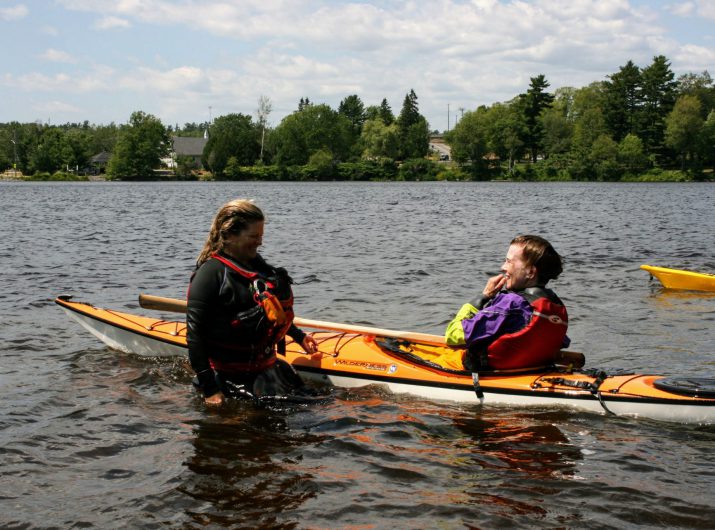
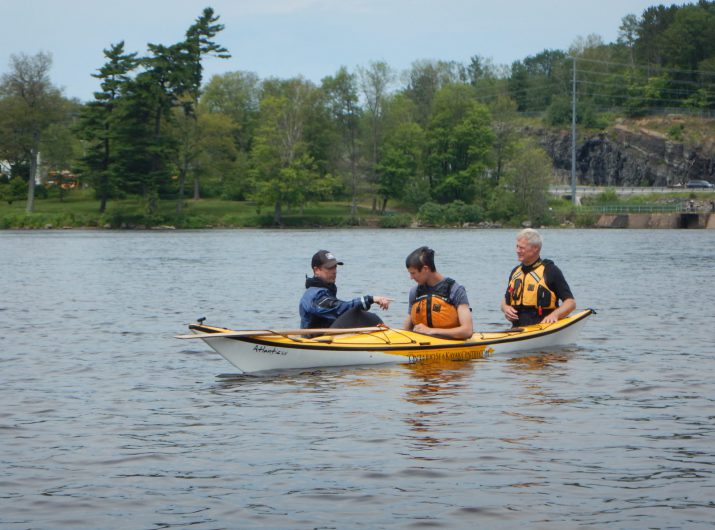
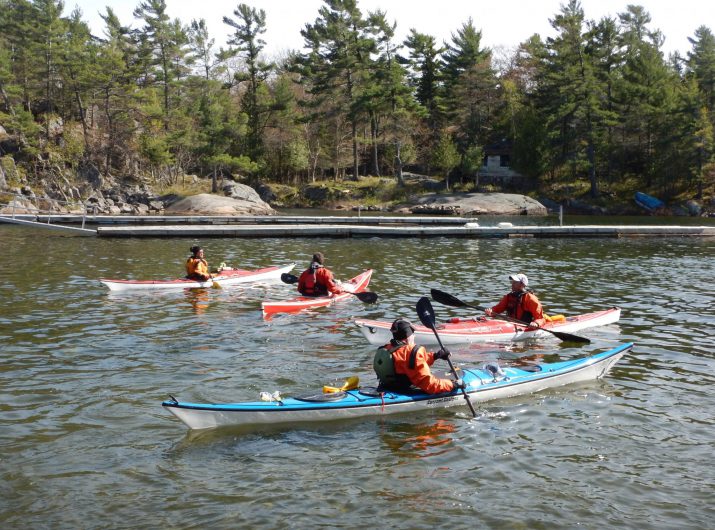
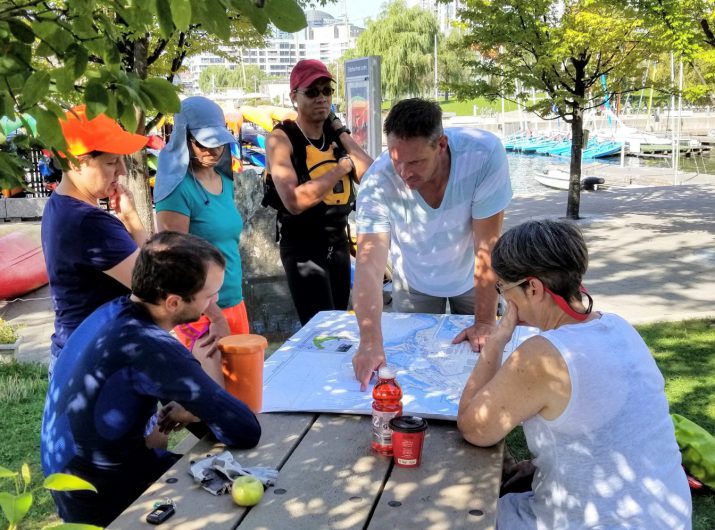
This year I had the pleasure to teach a bit on the water but to also teach a bunch of on-land sessions including weather, navigation and technology in the wilderness. Over the years I have taught lots of symposium kayak sessions so it’s sometimes a nice change for me to get out and stand on dry-land every once in a while.

Rolling Lesson

This was the first time that I was asked to run a session on technology in the wilderness and they wanted me to talk about personal locator beacons as well as more recreational focused devices like the SPOT or the Delorme inReach. I decided to expand the session topic a bit and try to put this technology in a bit more context by also exploring the Canadian Search and Rescue (SAR) system and explain to people how that monster works and what exactly happens when you hit that SOS button or activate your PLB. It made it a bit more interesting then just listening to a sales pitch about gear as you could get that by going to your local store and talking to the sales lady.

Of course teaching and running clinics are fun; but for me the real attraction of the weekend is hanging out with the other instructors who come into Toronto for the event. This year we had a bunch of out-of-towners including my podcast partner-in-crime, Kelly Blades, Michael Pardy, Sharon and Alec Bloyd-Peshkin, Paul Mason as well as my local Ontario friends who are always supportive and make their way south to Toronto.

Kids Canoeing

Special thanks for Mountain Equipment Co-Op for putting on the event once again.

Here is a mini slideshow of some of the photos I took over the weekend:

Google had a press conference yesterday (June 6) announcing several enhancements to their popular Google Maps system. There are a bunch of new changes coming our way including vastly improved 3D mapping of cities and offline maps but to me the coolest part of the announcement was the display of a new piece of hardware called the Streetview Backpack.

Weighing 35 pounds; it comes with 15 five mega-pixel cameras mounted on top. Most of the backpack weight is from the several small motorcycle batteries to keep running all day.

Google has plans to use it for mapping out hiking trails (eg. the Grand Canyon) as well as popular tourist spots where its Streetview Trikes can’t access.

Google Streetview Backpack View 2

Google has already shown that they are willing to map rivers when they rolled out streetview sections of the Amazon River. Could your favourite campsite be showing up on the internet soon? Time will tell I guess.

What do you think? Is it a good think that Google has plans to branch out and start mapping more remote areas?

More info: gizmodo.com

Podcast Icon

My good friend Kelly Blades and I were talking a while back about how outside of Simon Willis’s amazing work there really isn’t anybody covering sea kayaking in podcast form.

After talking about it for what seems like a year we decided it’s time to step up and do it; so without further adieu, we are proud to announce the first episode of our brand new series, Kayak Mainline.

The plan for Kayak Mainline is to talk about what’s happening out there in paddle land. We cover weird outdoor news, local gossip as well as interviews with the movers and shakers of the sea kayaking industry.

In our first episode we talk about cheetahs attacking, sharks attacking as well as a certain German woman attacking South America. We also have a great interview with Danny Mongo who is the Regional Sales Manager with Werner Paddles.

This is our first one so of course we sound like a bunch of amateurs who don’t know what we are doing but that is what we are very good at so it comes natural. I’m sure the next one should be better.

You have a couple of options for listening. You can either stream here online or download the .mp3 directly and import it into iTunes. We want to make your commute to work that much more interesting.

I’m in the process of sorting out things like RSS feeds and subscriptions for iTunes and I hope to have that stuff sorted out shortly.

Enjoy!

Kayak Mainline - Episode #1

Direct Download: mp3Episode #1

PS - I want to hear what you think. This email address is being protected from spambots. You need JavaScript enabled to view it. with your comments or ideas or post a comment below.

The What Happened Bandages

Sadly these amazing bandages are currently out of stock over to Urban Outfitters but if they were, I would make them an essential part of my wilderness first aid kit replacing the Dora the Explorer band-aids I currently use.

My extensive research tells me that while adults love Dora the Explorer, given the choice, 2 of 3 injured people would choose “Ninja Fight” over a jumping blue monkey and a weird looking girl with huge eyes.

A box of band-aids are $7 so make sure you save them only for your most injured clients/kids.

Get our Newsletter


Find Us on Facebook

Solo Stove Ad

About Me

David standing on a boat. Photo credit: BirgitDavid H. Johnston
Toronto, Ontario, Canada
View my complete profile

"Bring a compass, it's awkward when you have to eat your friends."

Strategic Partner

Paddle Canada Logo

P&H  Logo Werner Paddles Kokatat Logo North Water Aquapac Logo Seals Logo