The fold able pocket whiteboard.

I recently stumbled upon this interesting teaching tool: a foldable, pocket whiteboard.

It peaked my interest because there were several times over the past year when I was out teaching and wished I had a writing surface to get a complex concept across to my students. Beach sand and a stick can only go so far when explaining the wonders of a developing cold front.

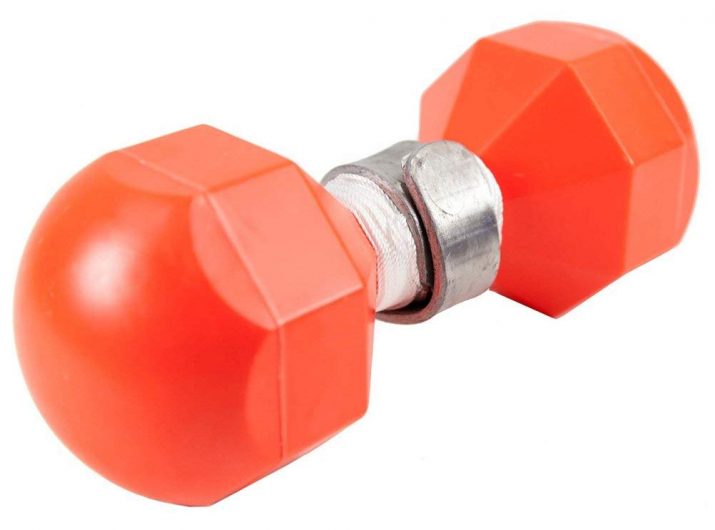
The whiteboard is made up of 27 mini pieces that folds up to roughly 3”x5”x0.2”. It folds out to 15”x27” giving you lots of whitespace to work with. The kit comes with a dry erase market and a microfiber bag which doubles as an eraser.

More info: thinkgeek.com

Published in Teaching

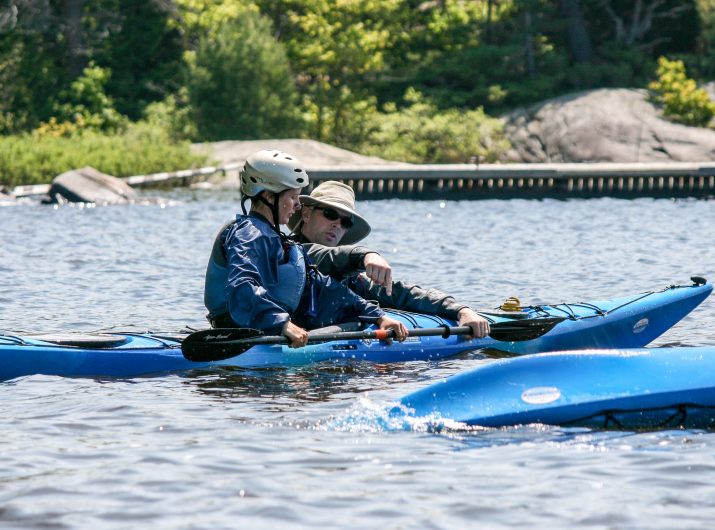
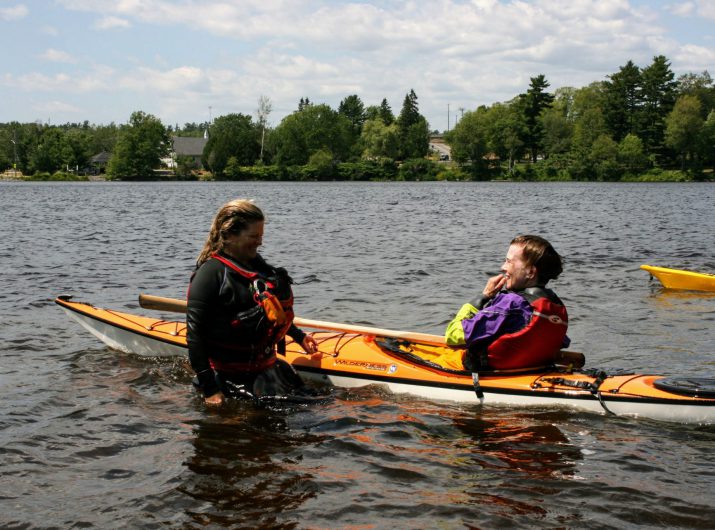
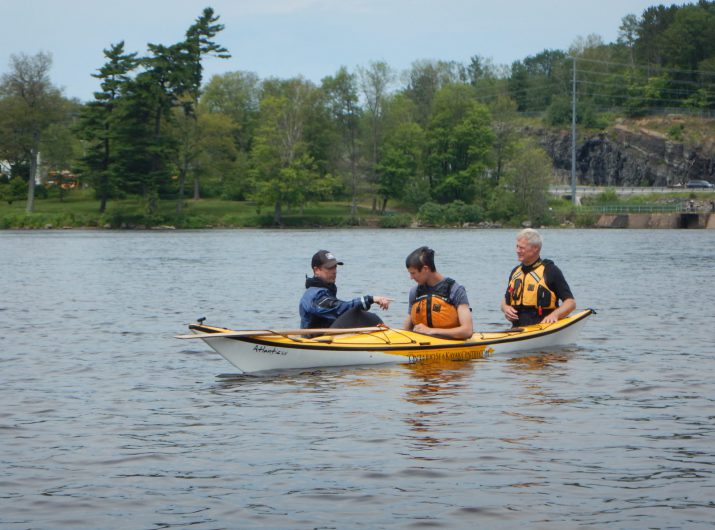
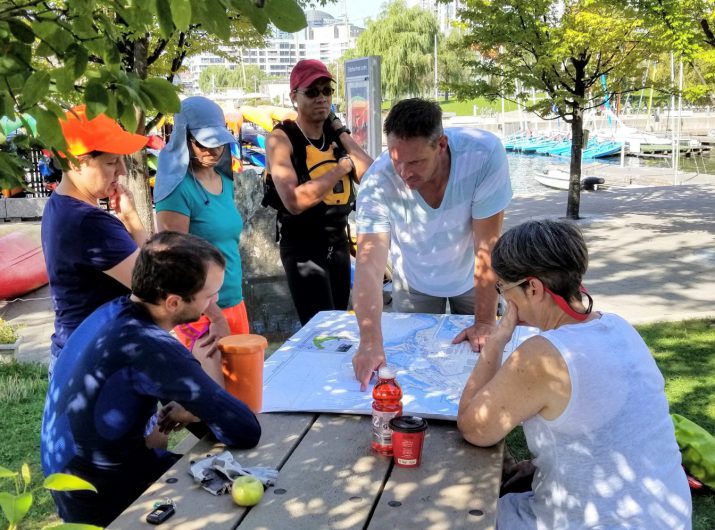
One of the toughest challenges for canoe or kayak instructors is to teach with another partner. This could be with a stranger that you have just met at a symposium or a fellow staff member at your local paddling school or club.

On the surface it seems to be a simple matter, after all you are only talking half the time but the reality is that more teaching disasters take place as soon as you add in a the second instructor. Like a complex dance routine, you need work together in harmony to ensure that your students are learning effectively.

Here is a very small selection of some of the crazy stories or situations I witnessed over the years:

  • Verbal arguments in front of students on the proper way to teach something as simple as the forward sweep.
  • Once teaching with two other instructors in a large group, one of the instructors decided to jump out of his boat in the middle of a class to give an impromptu lesson on how to stay cool on the water. All this happened while the other instructor was teaching the draw stroke. Totally derailed the lesson.
  • I heard of an instructor who once decided to arbitrarily change the lesson plan half way through the morning and announced on the spot that it would be more effective for him if he just took half the students and split the group.
  • I once took over my co-instructors boat design lesson because I really, really, really wanted to share some newfound knowledge. He was pissed and I still feel bad about it. Sorry Andrew!

Here are a bunch of random tips and ideas to help make teaching with another instructor a whole lot more fun:

  •  Meet before the class and map out exactly who is responsible for what elements of the lesson. This is critical and I can’t stress this enough. Even if you are one of those types who can teach on the fly, deciding who is teaching what during the actual lesson is not only unprofessional but a guaranteed recipe for disaster.
  • If you are not on stage teaching the stroke, keep you’re your trap shut. Students can only learn from one person at a time so show your co-instructor some respect and let her teach the lesson.
  • Check your ego at the door. Co-teaching is about sharing the spotlight so out of the way and don’t hog the attention.
  • Unless the lesson is sinking out of site or there is a danger to the class, don’t take over the lesson unless invited. Everybody has a bad day on the water or maybe it’s the first time teaching the skill and very nervous. Let them learn from the experience while you look for a place during a break in the conversation to gently help out.
  • When done your teaching segment always provide an opportunity for fellow instructors to add their tips at the end. That’s a good place for them to come in and add last minute tips or show another way to do the skill.
  • Like a car can’t have two drivers, you need to figure out who is going to run the lesson plan. The lesson plan driver takes the roll of dishing out the tasks and keeping everybody on time.
  • Finally, remember to share the teaching love. If you have new assistants out there helping you so make sure you give them a chance to do some teaching and build up their experience.
  • When you are done, a quick debrief about what worked and what didn’t will really help the next time you teach together.


You have a teaching tip? Share it in the comments below. 

Published in Teaching

You might have noticed that things have been a touch slow around here over the past little while. The reason is because I was away in Calgary, Albertafor the past two and a half weeks teaching several sea kayaking courses with my good friend, Tony Palmer from the local paddling shop, Undercurrents.

Over the 10 days I was teaching we ran a bunch of Paddle Canada courses including Level 1 Skills, Level 2 Skills, Intro to Kayaking Instructor and a Level 1 Instructor course.

I know that there are those of you who are thinking, “Alberta? Sea Kayaking? What?”

While it’s true that Alberta is known more for canoeing and whitewater kayaking there is some nice places to get out in the long boats including the many lakes all over the place and the long rivers that are perfect for the weekend of week-long trip. Also, the ocean is a quick 12h hop from Calgary to Vancouver if you are planning a paddling vacation.

Waiting to Go

A couple of quick highlights from my time out there include an overnight on the Bow River just south of Calgary. Along the 50km stretch that we paddled, the Bow is a meandering class 1 swift that runs along a valley carved out of the prairie grasslands. It was a totally fun experience.

We also got a chance (also part of the level 2 skills course) to get out on the Kananaskis River at Canoe Meadows and play in the moving water there. In the part that we paddled it wasn’t massive but a lot of whitewater kayakers did get kinda weirded out watching 16-foot sea kayaks take over the little eddies. Good times.


View Larger Map

Check out the Google Streetview of the Canoe Meadows parking lot below. I’m not sure what they are doing but it looks like a game of tag by a group of adults all topless and in wetsuits. I can understand why the Google car kept driving by. I would have done the same.


View Larger Map

One of the major goals of the courses in Calgary was to increase the number of active sea kayak instructors in the Province. Before this, there were only 2-3 SK instructors as well as only one instructor trainer. I was very happy to add another 9 instructors and 1 more IT to the ranks.

So now, I’m back in Toronto and getting ready for more stuff coming up. I checked the schedule and I’m teaching a bunch of land navigation and weather clinics at the upcoming MEC Paddlefest next weekend as well as another sea kayak instructor course coming up the weekend after that so I’m back to work on refining my lesson plans based on what worked and what didn’t out in Calgary. After 10 years of teaching instructor courses, lesson plans are a constant evolution.

Published in Teaching

1930's Swimming Leeson

I love this photo from the 1930’s of two kids learning how to swim. Somebody tell me that wasn’t how everybody was taught back then.

Via Black and WTF

Published in Photography

BASK-Rescue-06292008--0106

GCaptain had a great article yesterday called, Emergencies at Sea – Practicing What Can’t be Practiced. The takeaway message from the article is that it’s critically important not to forget the little details of any rescue and practice them as well. This also includes inspection of all emergency gear. A good example they provide is to actually pull the man overboard life ring from the wall and toss it overboard. Apparently the rings are difficult to get off the wall as they are designed not to get lost in the daily business of the ship and it takes more time then people think.

This got me thinking about rescue practice for canoes or kayaks. As paddlers we tend to focus on the primary element of the rescue which is getting yourself or your partner back in the boat. With time we get that dialled down but as you know there is a whole lot more little details that often get overlooked.

3176 canoe rescue (#5 of 9)

Here are a couple of thoughts and ideas to think about the next time you get out practising rescues:

  • Try to calling for help using your VHF radio or waterproofed cell phone while floating in the water in the actual conditions you are likely to swim in. If you have to pull gear from your boat, don’t let water get in.
  • If you had to call for help at any point throughout your day paddle, could you be able to describe verbally your location to authorities over the radio with relative accuracy?
  • Pull out your flares and do a full inspection. Are the instructions still legible? Are they expired and need replacing?
  • Fire off an expired flare. Ever done it from the water? In a real emergency, can you reach them from your canoe/kayak while floating in the water? Update: Sheilap reminded me that it's illegal to do. See the comments below.
  • Practice rescuing your partner while they are fake-injured. Common injuries include sea sickness (no balance), shoulder injuries or weak arms. How did your technique change? A dislocated shoulder can easily be faked by shoving your arm in your PFD.
  • If you are not the “PFD-on-at-all-times” type paddler, when was the last time you fell out of your boat and tried putting on your PFD in the conditions you will likely swim? Was it harder then you thought?
  • Have you given a good blast of your whistle lately? Does it still work and can your paddling partners hear it in high winds?
  • Try swimming with your boat to a nearby shore.
  • Pull out your mini first-aid kit while on water to fix a blister. Was everything you needed within arms reach?

Have you got ideas for lesson common things to keep in mind? Share them in the comments below.

Top Photo Credit: BASK-Rescue-06292008--0106 / CC BY-NC-ND 2.0
Bottom Photo Credit: 3176 canoe rescue (#5 of 9) / CC BY-SA 2.0

Published in Safety
Friday, 16 September 2011 16:41

The Limitations of a Paddling Class

Sometimes students taking an intermediate paddling class grumble that they wished they had learned the new skills during an beginner paddling class.

Of course you can’t learn everything in one day and some skills can’t be taught to absolute beginners and must be taught tomorrow.

Wayne Horodowich has written an interesting article over on paddling.net on these limitations and why an instructor needs to push some skills to an intermediate level class.

Another factor to consider about learning is, "you don't know what you don't know." If you don't even know the possibility exists you may never perform certain actions. That is why formal education is so important. As you learn more possibilities your base of knowledge expands. As the base gets bigger you can build more upon it. As a side note, if an instructor can build creative thinking skills and experimentation into their curriculum I believe students will discover more options on their own.

How does all off the above relate to a kayaking class? Obviously, as we learn our basic skills we are limited by what we have learned with respect to the points I was making above. At the end of your basic kayaking class your base of kayaking knowledge is what you have learned in your class unless you have had additional exposure to the sport. You are unaware of all you do not know about kayaking.

Read the full article here.

Published in Teaching
Tuesday, 13 September 2011 12:36

Quick Report about Teaching on Lake Superior

Synchronized Paddle Dancing

It’s been a very, very busy couple of weeks and I realized that I never got a chance to write about my must recent adventure teaching onLake Superiora couple of weeks ago.

For the second year in a row, I had the pleasure of being invited up to Naturally Superior Adventures to teach a Paddle Canada Level 2/BCU 3* course.

My good friend, Erik Ogaard was also teaching a Paddle Canada level 3 course that same week so I hitched a ride with him. The journey north from Toronto to Wawa is no small trip across town. The 12 hour adventure requires CD playlist ground rules and it was quickly established that we would only listen to greatest hits CD’s by artists from the 70’s and 80’s. With that in mind we made the trip rocking to Bruce, The Zeppelin, The U2’s and Mr. Bowie. Needless to say there was a solid amount of both air guitar and drumming to keep the cars passing us entertained.

The original plan was for Naturally Superior Adventures to offer the two courses during the same week. The level 2/3* was going to be taught by Bonnie Perry, myself and assisted by Ray Boucher and the level 3 by Erik but due to some last minute participant drop-outs, we decided to combine both levels and teach everything as a level 3/3* course.

The Kayak Lesson

Combining courses always has potential pitfalls. There is the potential for level 2 students to be overwhelmed by the level 3 material and level 3 students to be underwhelmed by the paddling conditions. Since we had four instructors we decided to work as a group and split up into smaller groups if necessary to deliver the material at the different group’s skill levels. With very careful planning, it was a working model that ended up being quite successful.

Anyways, I had an absolutely fantastic time teaching with my fellow partners in crime, Bonnie, Erik and Ray and I pretty much spent the whole time laughing at and with them. They are both awesome people to hang out and teach with.

Coming Home

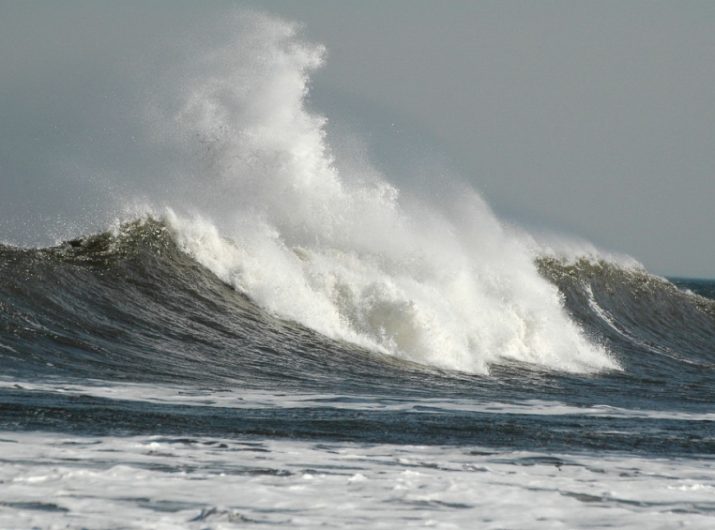
For teaching environments you can’t ask for a much better location then at Naturally Superior Adventures. The base is located right at the mouth of the Michipicoten River where flows into Lake Superior. If you are looking for rough water you just paddle out on the lake. The whole time we were there it was blowing an average of three foot wind waves. If you the waves get too big (as they did on day 1 with 7 footers rolling in) then just paddle up the river and find some shelter. Finally if you are looking for surf then all you need to do is get out and paddle in the river mouth. When the current is flowing and the wind is blowing against it, the surf gets absolutely huge. By huge, I mean screaming girl huge.

Thumbs Up

For me, I pretty much gauge the success of any advanced course on how much gear I lose and the number of new scratches I get on my boat. It must have been successful asLake Superiorstole both my hat and sponge as well she gave me a hole in my boat as a parting gift. I can’t blame her; I was the idiot with the brilliant idea to go rock hopping in swells with a fully loaded boat.

Here are a bunch of photos from the week:

[flickr set=72157627430223489]

Published in Trips
Towing Clinic

Teaching can be a real double edge sword. On one hand you get the excitement of showing your students the coolest things about paddling but on the other hand if you are teaching a certification course you sometimes have to face the fact that not all your students will pass.

I know there are readers out there who argue that organized certification programs might not the best environment to learn under and feel that that long-term peer-to-peer teaching and mentoring are better models for learning. While there are good arguments that different types of learning work for different people, lets set that conversation aside for another day as I want to focus on the thousands of certification courses run over the season.

One of the good things about organized certification courses offered by groups like the American Canoe Association, Paddle Canada or the British Canoe Union is that they offer a clear syllabus with learning outcomes at each level. The benefit is that it provides a clear benchmark for the student to see how their their personal skills line up with the overall program. It also provides clear stepping stones of success as they work their way up the certification ladder.

It’s human nature that every paddling instructor wants their students to succeed but sometimes you do all you can and still the the student still comes up short. For an instructor, telling somebody that they didn’t meet the requirements of the certification level can be one of the hardest things. Over the years I have seen fellow instructors break down in tears after giving the news and I once heard of a coach in the US who gave up teaching instructor courses for several years after one particularly upsetting encounter.

Below are a couple of tips and random thoughts to help soften the blow of giving the bad news to your students:

Think of Possible Options
What options do you have to work with? Some programs the only option is to pass or fail the student while others provide the option of a conditional pass for some levels. Conditional passes can be a great option as they allow the student to walk away and work on the one or two skills then come back for testing at a later date. They work great for students who are so close to success but not quite there. Conditional passes do require extra responsibilities on your part as well as a commitment to work with the student down the road long after the course is completed.

Other possible options could be to go and take some specific coaching lessons? Do you know any instructors in the students neighbourhood you could send them to for extra training then another assessment later in the season?

Why did they originally sign-up?
I like to find out at the start of the course the students goals and objectives for signing up and make a mental note of it. Often students are just there to learn and have no interest in the certification aspect of the course. If they don’t care then that might change how you approach the overall conversation.

Prepare Your Student Early
If you have a feeling that your student isn’t going to meet the certification requirements it’s in your best interest to plant the seed with them that you are concerned. You owe it to them to be honest and it would be really unfair if they walked into a certification debrief thinking they were passing when they weren’t.

Document Everything
If a student is not going to pass, make sure you document specific instances in the course or specific skills that lead to the decision and be prepared to show them to the student. Having clear documentation will give you a stronger foundation to stand on for students who try to argue or try convince you to change your mind. The reality is that you should be documenting the skills learned and students progression but it’s important that you pay close attention to struggling students.

You Need to Have a Tangible Reason
It’s critical that you have a tangible reason why the student can’t complete the course. An example of a tangible reason is the he can’t roll his kayak when it’s a required skill to pass. An example of a poor reason is that you have a “feeling” that the student is unsafe on the water. You need provide clear an irrefutable evidence and examples.

It’s Not Over for Paddling
As much as they are disappointed, remind them that not getting the certification card isn’t the end of the world as they still learned a pile of stuff throughout the course and they still have the skills to enjoy a day out on the water and that’s way more important then a card that eventually ends in their dresser drawer. They can always come back and either take the course again. Talk to your boss and find out if there would be discounted charge for them to come back at a later date to challenge the test again.

Be Transparent and Develop and Assessment Sheet
Make sure your assessment process is transparent and fair as possible. Develop an assessment sheet to make your notes on and give a photocopy to the students when they leave. The American Canoe Association has an excellent example of an assessment sheet that you can use. If you don’t teach the ACA program, you could develop a similar one for your self.

Work with the student to develop a plan of action for success in the future
If you tell your student, “Sorry you failed. See yeah.” there is a 100% chance they are going to quit paddling and take up golf the next day. Instead, work with the student during the course debrief to develop an action plan so they know the next steps and what they need to work on for success next time.

I hope that this helps with your future courses. If you have ideas I missed, add them to the comments section below. Special thanks to @bryanhansel, @elements_eu_ltd and @KayakToTheSea for their great suggestions for this article.

Published in Teaching
Friday, 19 August 2011 16:42

Off to Lake Superior

Beach Lesson 2

I’m off for a week teaching in Wawa, Ontario on the north shore of Lake Superior so I won’t be posting anything until I get back.

I’m excited to be working for Naturally Superior Adventures teaching a Paddle Canada Level 2 and BCU 3* course with instructor extraordinaire, Bonnie Perry who hails from Chicago, US of A.


View Larger Map

See you soon!

Published in Boring Site News

Last week I got sent on a training course for work on how to manage information technology. The only thing that made the day interesting was watching the course instructor try to control his class and deal with a very dominating student. Within the first 10 minutes of the course starting the student took over the class with inappropriate interjections, challenging the instructor and asking a large number of questions (9 in 10 minutes).

As I watched the instructor struggle to regain control; I started to think about how I would possibility handle the same difficult scenario if it presented itself in one of my kayaking classes.

Here are a couple of random thoughts on dealing with two different types of difficult adult students.

1) The, I-have-a-million-questions-to-ask student
Don’t let student questions take over the lesson plan. If you have a student that likes to ask lots of questions not specific to what you are teaching at the moment (but planning to cover later), don’t fall into the time-eating trap of explaining your material twice. If it’s going to be covered later defer it until then if possible. Think of your other students and don’t let them get confused or frustrated by jumping around topics. Try to stick to your overall lesson plan and address the question later.

Change your teaching style. Paddling instructors often use an interactive and informal teaching style when on the water but sometimes that doesn’t work if you are constantly getting interrupted. Quietly change over to more lecture style teaching to get through the material with specific points throughout for questions and discussion. It can help save time and keep the lesson moving.

As a last resort (and using your best kid-gloves), tell your class to hold all questions until a set time for questions as it will help keep the flow of the lesson going.

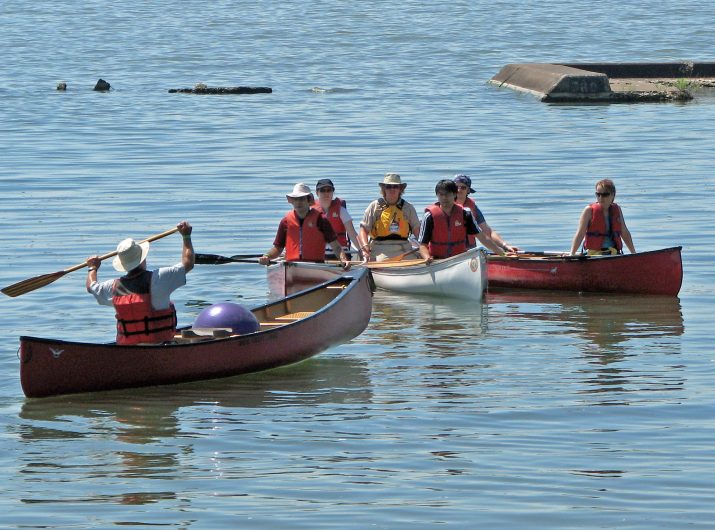
Canoe Instruction at Sunnyside

2) The, I-Know-More-Than-You Student
Ever had a student who challenges or argues constantly you? “That’s not how so and so taught me how to do it…” or “In my 12 years of paddling I did it this way…” It can be really frustrating for the instructor when a student starts undermining your lesson.

A good way to defuse the challenger (at least what works for me) is to explain to the whole group that there are several different ways to do the taught skill and this is a new technique that you want to show everybody. It seems to work well as it acknowledges the students past experience yet also tells the other students there might be better ways to do it.

Also, if you are teaching a skill that seems to always draws out lots of opinions (I’m looking at you rescue practice!) then do a pre-emptive strike at the beginning acknowledging there are several different ways and this is just one of many techniques. Trust me; this really helps in defusing that argumentative soul.

If you have a student who just keeps arguing with you that your technique is wrong and their technique is way better, remember that you are both adults and you are the professional. Ask yourself if it really matters to argue and fight with the student to force them to do it your way. If it’s something that is required from a certification point of view then I make them aware that they need to demonstrate the skill to the cert standard but certification or safety isn’t an issue is it really necessary to fight with them? Only you will know; but over the years I have seen co-instructors continue to argue with students long after I felt that they could have dropped the issue.

Remember that confidence is one key to success in dealing with difficult personalities. You are in charge and its your lesson, your students, your timeline and your material so don’t let the train get off the tracks. If you do see a potential train wreck, stop the conversation or questions and promise to follow-up at a more appropriate time like lunch. Your other students will thank you for it.

So how did we all survive the technology training course from last week? Well the instructor quickly lost his confidence and was stumbling to get things back on track. It wasn’t until another student stood up and took control that things got sorted out. She told the, “I-have-a-question” student that she was acting inappropriately and reminded her that it was a general course and to stop hijacking the lesson with her own personal agenda. Yes there was some yelling. Not the most polite way to deal with it but it got the job done and made an extremely boring morning way more interesting.

Looking for more teaching resources? Here are several resources for download on how to be a better instructor

Top Photo Credit: Intro to Surf Lesson by Joel Cooper. http://creativecommons.org/licenses/by-nc-sa/2.0/deed.en_CA / CC BY-NC-SA 2.0
Bottom Photo Credit: Canoe Instruction at Sunnyside by Bobcatnorth http://creativecommons.org/licenses/by-nc-sa/2.0/deed.en_CA / CC BY-NC-SA 2.0

Published in Teaching
Page 1 of 2

Get our Newsletter


Find Us on Facebook

Solo Stove Ad

About Me

David standing on a boat. Photo credit: BirgitDavid H. Johnston
Toronto, Ontario, Canada
View my complete profile

"Bring a compass, it's awkward when you have to eat your friends."

Strategic Partner

Paddle Canada Logo

P&H  Logo Werner Paddles Kokatat Logo North Water Aquapac Logo Seals Logo